
Canadians With U.S. Rental Property: Forms & Reporting Requirements Explained

Owning rental property in the United States can create valuable income opportunities for Canadians, but it also comes with complex cross-border tax obligations. From IRS withholding rules and rental income reporting to Canadian foreign income disclosures and tax credit claims, compliance requirements exist on both sides of the border.
The forms required—and how the income is reported—often depend on how the property is owned and whether specific tax elections are made. Understanding these rules is essential to minimizing tax exposure and avoiding costly filing mistakes.
Tax Residency Considerations
Your tax residency controls where you report rental income, which forms you file, and how you claim foreign tax credits. You must review both Canadian and U.S. rules to avoid penalties and double taxation.
Determining Canadian Tax Residency
Canada taxes you based on residency, not citizenship. If you are a Canadian tax resident, you must report your worldwide income, including U.S. rental income, on your T1 return.
The CRA looks at your residential ties. These include:
- A home in Canada
- A spouse or common-law partner in Canada
- Dependants in Canada
- Provincial health coverage
- Canadian bank accounts and driver’s licence
If you keep strong residential ties, the CRA will likely treat you as a factual resident, even if you spend months in the United States.
You must also report foreign property if the total cost exceeds CAD $100,000 at any time during the year. U.S. rental real estate counts toward this limit and may require filing Form T1135.
Your residency status affects every reporting step, so confirm it before filing.
Impact on U.S. Real Estate Ownership
If you are a non-resident of the United States, the IRS still taxes your U.S. rental income.
By default, the payer must withhold 30% of gross rent. This means tax applies before expenses. However, you can elect to treat the income as effectively connected with a U.S. trade or business. You do this by filing Form W-8ECI and Form 1040-NR.
This election lets you deduct expenses such as:
- Mortgage interest
- Property taxes
- Insurance
- Repairs
- Property management fees
- Depreciation
Without this election, you cannot deduct these costs.
Your residency status in Canada does not remove your U.S. filing duty. You must comply with both systems.
Dual Taxation Issues
You may pay tax on the same rental income in both countries. Canada taxes you on worldwide income if you are a resident. The United States taxes you because the property sits within its borders.
The Canada–U.S. tax treaty helps reduce double taxation. In most cases, you claim a foreign tax credit on your Canadian return for U.S. federal tax paid on the rental income.
To claim the credit properly, you must:
- Report the gross rental income in Canadian dollars.
- Deduct eligible expenses under Canadian rules.
- Convert and report U.S. tax paid.
Depreciation rules differ between the two countries. This can create timing differences in taxable income.
Clear records and accurate currency conversion are essential. Proper reporting ensures you pay the correct total tax, not tax twice on the same income.
Key U.S. Tax Forms for Canadian Owners

When you own U.S. rental property, you must report income to the IRS each year and, in some cases, file forms to reduce withholding or handle a sale. Each form serves a specific role and missing one can lead to penalties or excess tax withheld.
IRS Form 1040NR
You file Form 1040NR if you are a non-resident of the United States earning rental income from U.S. real estate. The IRS treats this income as U.S.-source income, even if you live and pay tax in Canada.
You report your rental income and expenses on this return each year. The due date is generally June 15 if you live in Canada, but any tax owing is still due by April 15 to avoid interest.
If you do not make a net income election, the IRS can tax your rental income at a flat 30% on the gross amount. Most Canadian owners choose to file on a net basis instead, which allows you to deduct expenses and often lowers the tax bill.
Schedule E: Supplemental Income and Loss
You attach Schedule E to Form 1040NR to report rental income and expenses. This schedule shows how you calculate your net rental profit or loss.
You must report:
- Gross rents received
- Property management fees
- Mortgage interest
- Property taxes
- Insurance
- Repairs and maintenance
- Depreciation
Depreciation is often the largest deduction. The IRS requires you to depreciate residential rental property over 27.5 years using U.S. rules, not Canadian CCA rules.
You must convert all amounts to U.S. dollars using a consistent exchange rate method. Keep clear records in case the IRS reviews your return.
Form W-8ECI
By default, the IRS requires a 30% withholding on gross rent paid to non-residents. This can create cash flow problems because the withholding applies before expenses.
You can reduce or eliminate this withholding by filing Form W-8ECI with your property manager or tenant. This form states that your rental income is effectively connected with a U.S. trade or business.
When accepted, rent is no longer subject to the 30% gross withholding. Instead, you report the income and expenses on Form 1040NR and pay tax on the net amount.
This election works best when you have significant expenses or a mortgage interest.
Form 8288-A and 8288-B
When you sell U.S. rental property, the Foreign Investment in Real Property Tax Act (FIRPTA) rules apply. The buyer must withhold a percentage of the gross sale price and send it to the IRS.
Form 8288-A reports and remits this withholding. You receive a stamped copy as proof of tax paid.
If the required withholding is higher than your expected tax liability, you can apply for a reduced withholding certificate using Form 8288-B before closing. This step can lower the amount withheld and protect your cash at closing.
Canadian Tax Reporting Obligations
If you live in Canada, you must report your worldwide income to the CRA. That includes rental income from U.S. property, related expenses, and certain foreign asset disclosures.
T1135 Foreign Income Verification Statement
You must file Form T1135 if the total cost amount of your specified foreign property exceeds $100,000 CAD at any time in the year. U.S. rental real estate usually counts as specified foreign property unless you use it only for personal purposes.
Report the maximum cost during the year, the cost at year-end, and the income earned. You also report any capital gain if you sold the property.
You can use the simplified reporting method if your total foreign property cost stays under $250,000 CAD all year. If it exceeds that amount, you must provide detailed information for each property.
The CRA imposes steep penalties for late or incorrect T1135 filings.
Reporting U.S. Rental Income on T1
You report U.S. rental income on your T1 personal tax return using Form T776 – Statement of Real Estate Rentals. Convert all amounts to Canadian dollars using the Bank of Canada exchange rate.
Report your gross rental income, then deduct eligible expenses such as:
- Property taxes
- Mortgage interest (not principal)
- Insurance
- Repairs and maintenance
- Property management fees
- Depreciation (CCA), if you choose to claim it
Canada taxes you on net rental income, not gross income. As a Canadian resident, you must report income from all countries.
Keep records of exchange rates, invoices, and proof of payment. The CRA may ask for support several years later.
Foreign Tax Credit Claims
You can claim a foreign tax credit if you paid U.S. tax on the same rental income. This prevents double taxation.
Claim the credit on Form T2209 (federal) and the related provincial form. The credit generally equals the lesser of:
| Comparison | Amount |
|---|---|
| U.S. tax paid on rental income | Actual tax paid to the IRS |
| Canadian tax payable on that same income | Calculated Canadian tax |
Keep copies of your U.S. return, IRS notices, and proof of payment. You can only claim a credit for tax that you actually paid and that relates directly to the rental income.
If U.S. tax exceeds your Canadian tax on that income, you may not recover the full difference. Careful calculation ensures you claim the correct amount and avoid reassessments.
Withholding Taxes and Treaty Benefits
U.S. rental income paid to you as a Canadian resident often triggers automatic withholding. You can reduce or avoid excess withholding if you file the correct forms and claim treaty benefits properly.
30% Withholding Requirement
If you earn rental income from U.S. property, the IRS treats you as a non-resident alien. By default, the payer must withhold 30% of the gross rent, not your net profit.
This means the tax applies before expenses such as mortgage interest, property tax, insurance, or repairs. If you collect $2,000 per month in rent, $600 may be withheld even if your actual profit is much lower.
You can avoid this gross withholding by making a net income election. You file Form W‑8ECI with the payer and report the income on Form 1040‑NR.
This election lets you pay U.S. tax on net rental income at graduated rates instead of a flat 30% on gross rent.
Reduction of Withholding under Canada‑U.S. Tax Treaty
The Canada‑U.S. Income Tax Treaty helps prevent double taxation. It does not eliminate U.S. tax on rental income, but it ensures you receive credit in Canada for U.S. tax paid.
Under the treaty, rental income from real property is generally taxed in the country where the property is located. The IRS explains this rule in its publication on the United States‑Canada Income Tax Treaty.
You still report the income on your Canadian T1 return. You then claim a foreign tax credit for U.S. tax paid, which reduces your Canadian tax owing.
If you receive other U.S. income, such as dividends or interest tied to the property, treaty rates may lower withholding.
Accurate filing on both sides of the border protects you from penalties and avoids paying more tax than required.
Cross-Border Tax Strategies

You can lower risk and avoid double taxation when you structure ownership correctly and track income with care. Legal entities and proper currency reporting both affect how much tax you pay in Canada and the United States.
Utilizing Legal Entities
You can own U.S. rental property in your personal name, through a U.S. LLC, or through a Canadian corporation. Each option changes your filing duties and tax result.
Many Canadians hold property personally and file U.S. Form 1040‑NR. In this case, you often report net rental income after expenses and depreciation.
A U.S. LLC may create issues in Canada. The CRA may treat the LLC as a corporation, while the IRS may treat it as a flow-through entity. This mismatch can cause double tax if you do not plan carefully.
A Canadian corporation can limit liability, but it may trigger extra U.S. branch tax or complex reporting. Before you transfer property into any entity, review:
- U.S. estate tax exposure
- Ongoing filing costs in both countries
- Access to foreign tax credits in Canada
Small structure changes can lead to major reporting differences.
Timing and Currency Conversion Considerations
You must report U.S. rental income in U.S. dollars to the IRS and in Canadian dollars to the CRA. Exchange rates directly affect your taxable income in Canada.
The CRA generally requires you to convert income and expenses using the Bank of Canada rate in effect on the transaction date or an accepted annual average rate. If the Canadian dollar weakens, your reported Canadian income may increase even when your U.S. profit stays the same.
You should also track:
- Purchase price in Canadian dollars at the date of acquisition
- Capital improvements with their historical exchange rates
- Sale proceeds converted at the rate on the closing date
Currency shifts can create a capital gain in Canada even if the U.S. gain looks smaller.
Careful records help you claim accurate foreign tax credits and avoid paying tax twice on the same income.
Reporting Property Sales and Capital Gains
When you sell U.S. rental property, you must deal with U.S. withholding tax and report the gain in both countries. The United States collects tax first, and Canada then taxes you on the same gain with relief under the tax treaty.
FIRPTA Rules for Non-U.S. Residents
When you sell U.S. real estate as a Canadian resident, the buyer must withhold 15% of the gross sale price under FIRPTA. This rule applies even if you made little or no profit.
The 15% is not your final tax bill. It is a prepayment sent to the IRS. You report the actual gain on a U.S. non-resident return, usually Form 1040-NR, and calculate the true tax owing.
Your capital gain equals:
- Sale price
- Minus adjusted cost base
- Minus selling costs
- Plus any depreciation recapture
Depreciation you claimed reduces your cost base and may trigger additional U.S. tax.
You can apply for a reduced withholding certificate before closing if 15% is too high compared to your expected tax. Review the details in this guide on selling U.S. property as a Canadian and FIRPTA rules.
File your U.S. return on time to claim a refund if too much tax was withheld.
Canadian Tax Implications of Dispositions
Canada taxes you on your worldwide income, including gains from U.S. real estate. You must report the sale in Canadian dollars on your T1 return for the year of disposition.
Only 50% of your capital gain is taxable in Canada. You calculate the gain by converting both your original purchase price and your sale proceeds into Canadian dollars using the exchange rates in effect on those dates.
You report the gain on Schedule 3 and include it on line 12700, as explained in the CRA guide on calculating and reporting capital gains and losses.
To avoid double taxation, you can claim a foreign tax credit for U.S. tax paid. The Canada–U.S. Tax Treaty allows you to offset U.S. tax against your Canadian tax on the same gain, but you must keep proof of tax paid and IRS filings.
Deductible Expenses and Depreciation Methods
You must report your U.S. rental income in both the United States and Canada. You can reduce that income by claiming eligible expenses.
For Canadian reporting, you claim rental expenses on Form T776. The CRA outlines common deductions such as mortgage interest, property taxes, insurance, utilities, repairs, and management fees in its guide to rental expenses you can deduct.
Common deductible expenses include:
- Mortgage interest (not principal)
- Property taxes
- Insurance premiums
- Repairs and maintenance
- Property management fees
- Advertising and utilities
You may only deduct expenses for the period the property was available for rent. The IRS explains these limits in Publication 527, Residential Rental Property.
Depreciation also reduces your taxable rental income in the U.S. Residential rental property is generally depreciated over 27.5 years under U.S. rules.
In Canada, you may claim Capital Cost Allowance (CCA) instead of depreciation. CCA is optional, and it cannot create or increase a rental loss.
You must also track exchange rates and claim a foreign tax credit where eligible. Proper reporting of foreign rental income taxation helps you avoid double taxation.
Penalties for Non-Compliance
If you fail to file required U.S. returns, the IRS can charge penalties and interest. For example, Form 1040‑NR is generally due by June 15 for non‑residents, and late filing can trigger non‑filing penalties.
If you do not report rental income properly, you may also lose the ability to claim deductions. Filing 1040‑NR allows you to treat rental income as effectively connected income and claim expenses. Without proper filing, the IRS can assess tax on gross rent.
On the Canadian side, you must report foreign property on Form T1135 if your total specified foreign property cost exceeds $100,000 CAD at any time in the year. Failure to file can lead to steep penalties, including a basic penalty that can reach $2,500 per year.
Common risks include:
- Late filing penalties
- Interest on unpaid tax
- Loss of deductions
- Increased audit risk
You reduce these risks when you file complete and accurate returns on time in both countries.
Record-Keeping and Documentation Requirements
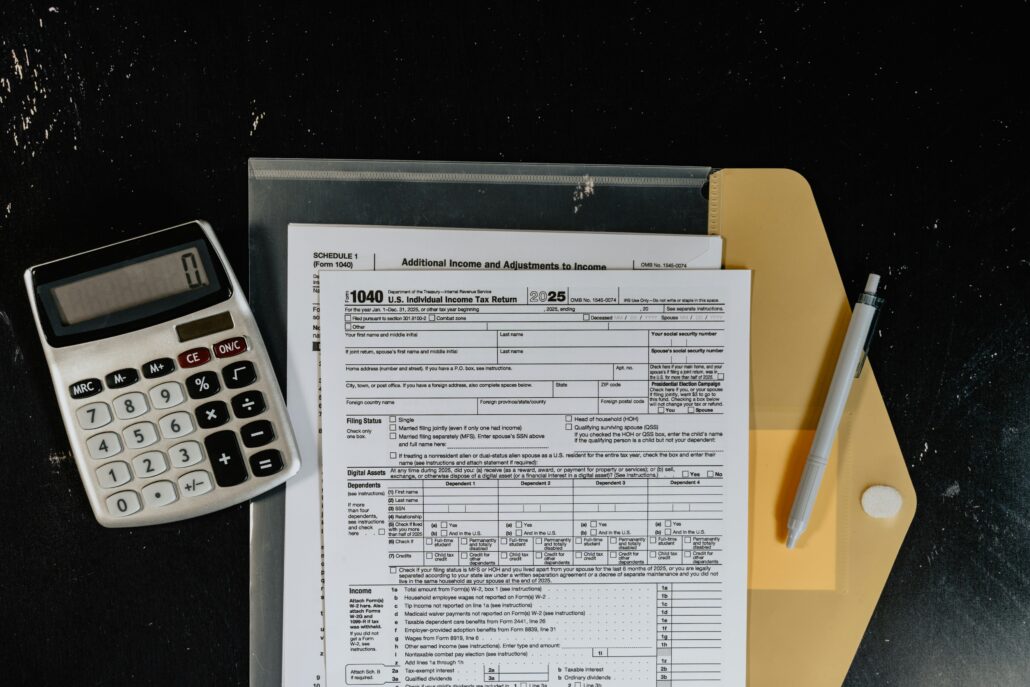
You must keep clear records for both the CRA and the IRS. Good records support your income, expenses, and tax elections. They also protect you if either tax authority reviews your return.
Keep documents for at least six years from the end of the last tax year they relate to, as required by the CRA. In some cases, such as long‑term property records, you may need to keep them longer, as noted by the CRA record‑keeping rules.
Maintain organized records in digital and paper format when possible. Store them securely and back them up.
Key documents to retain:
- Purchase agreement and closing statement
- Mortgage documents and annual interest statements
- Property tax bills and insurance policies
- Rental agreements and tenant records
- Repair and maintenance invoices
- Travel and property management fees
- U.S. tax filings (such as Form 1040‑NR)
- Canadian filings, including Form T1135 for foreign property over the reporting threshold
Track income and expenses in Canadian dollars for CRA reporting. Keep exchange rate records for each transaction date or use the CRA’s accepted annual average rate when allowed.
If you claim depreciation in the U.S., keep detailed schedules. These affect both your U.S. tax and your Canadian adjusted cost base.
Common Reporting Mistakes
You can avoid many problems by watching for common errors. Most issues come from missed forms, wrong numbers, or poor records.
Frequent mistakes include:
- Not filing Form 1040NR to report U.S. rental income
- Failing to file NR6 and Section 216 returns when you elect to pay tax on net rent
- Forgetting to report the property on Form T1135
- Using the wrong exchange rate
- Claiming personal expenses as rental costs
If you own foreign property with a cost over the reporting threshold, you must file T1135. The T1135 reporting rules for foreign rental properties apply even if the property earns little or no income.
You also need to file a U.S. non‑resident return each year. Many Canadians miss this step, which leads to penalties and interest.
Another common issue involves tax credits. You must report the same rental income in both countries and claim foreign tax credits properly. Errors in exchange rates or credit claims can cause reassessments.
Keep clear records of rent, expenses, mortgage interest, and days of personal use. Good records protect you if the CRA or IRS reviews your return.
The Bottom Line
Canadians with U.S. rental properties must carefully coordinate their U.S. and Canadian tax filings to ensure income is reported correctly and double taxation is minimized. Missing forms or filing incorrectly can trigger unnecessary withholding taxes, penalties, or CRA and IRS scrutiny.
JKC Group helps Canadian taxpayers manage cross-border real estate reporting with clarity and confidence. Book a consultation with our team to ensure your U.S. rental property filings are accurate, compliant, and tax-efficient.